

Make a world.
Know how it works.
The maps, tools, and inner workings of Dusk. A place to find your bearings, build something, and go deeper.
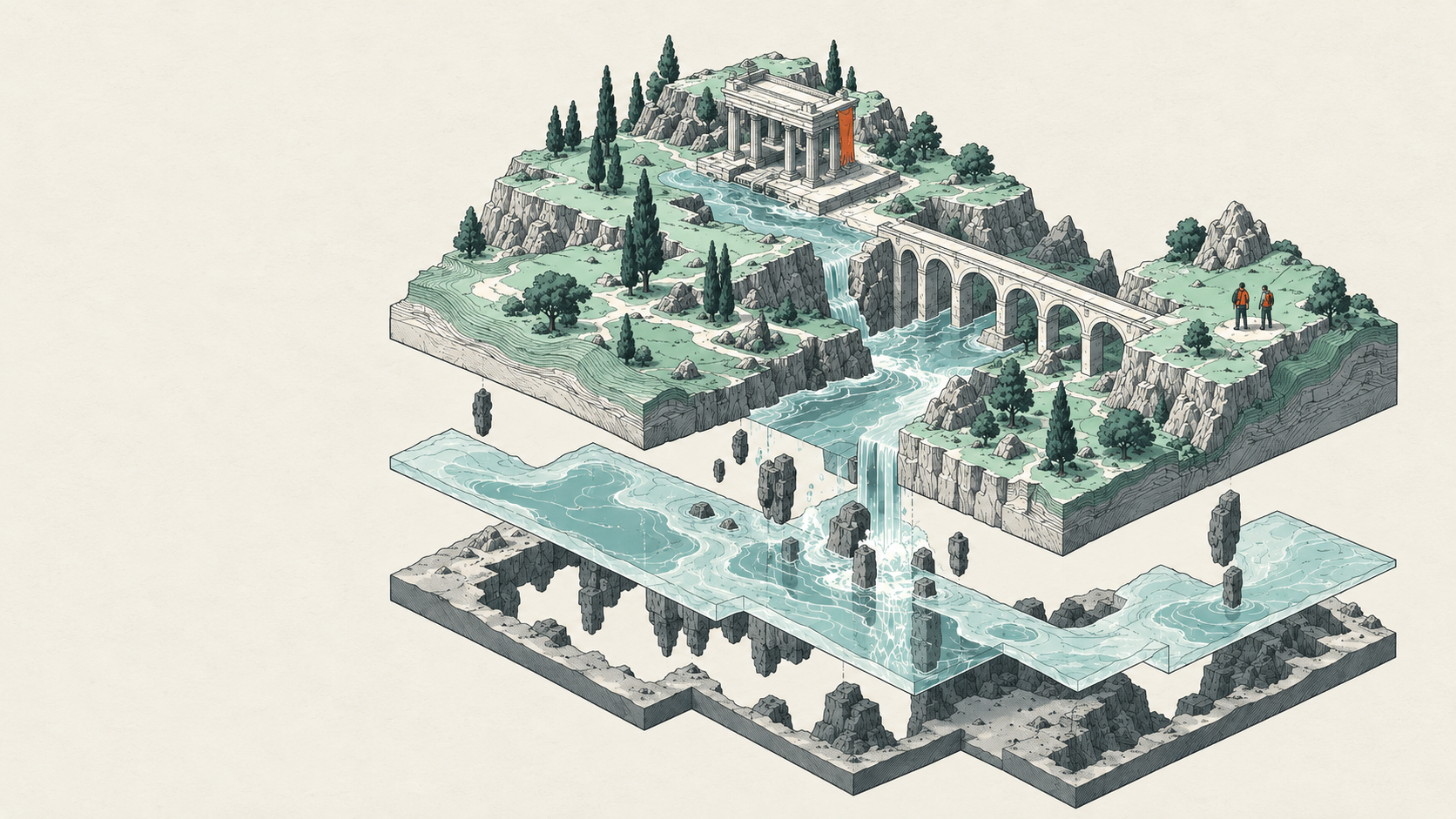
A good place to begin.
Build your first world
A direct path from the engine to a saved, shared place.
Understand the engine
Trace the contracts from simulation to a rendered frame.
Host a shared world
Authority, persistence, operations, and a recoverable release.
Follow a line of inquiry.
Getting started
Meet Dusk, build your first shared world, and explore the reference games.
4 documents 02World authoring
Shape a place, collaborate on a draft, and publish a world worth sharing.
12 documents 03Landscape & atmosphere
Terrain, living landscapes, water, weather, and the atmosphere between them.
11 documents 04Models, materials & animation
Bring artwork into a world, from immutable model imports to materials and skeletal motion.
16 documents 05Gameplay & interaction
Controls, characters, physical objects, behaviors, and shared journeys.
19 documents 06Rendering & presentation
The WebGPU renderer, its presentation boundary, and the path from scene data to a frame.
9 documents 07Runtime & toolchain
The core contracts, time, identity, compilers, checkpoints, and recovery systems.
8 documents 08Multiplayer & rooms
Room authority, shared presence, streamed content, and a traveler’s persistent identity.
9 documents 09Hosting & operations
Run a room, retain its engine, protect its state, and understand its operational limits.
7 documents 10Project & research
Architecture, research, decisions, delivery history, and revision-specific acceptance records.
9 documentsImplementation has a history.
Read the current delivery record, follow the roadmap, and trace a result back to its evidence. Dates, limits, and revision-specific acceptance remain part of the documentation.